
Radiance Rules FAQ and Clarifications
Welcome to the Radiance FAQ article! As mentioned in the Radiance Release Notes article, the FAQ article serves as a collection of rulings and clarifications at our usual cadence, and serves as an additional supplemental article to the Release Notes article.
The FAQ is a collection of official rulings. In places where the FAQ differs from the Core Rules Document, the FAQ takes precedence. When a new Core Rules Document is released, it will take precedence over any points that differ from this document.
Throughout this document, we use some specific shorthand to represent symbols in card text. Here’s a short guide:
- [E] means “exhaust”
- [M] means “Might”
- [A] means “one power of any domain”
- [C] means “one power of this card’s domain”
- [C] in Accelerate costs takes on the domain of the Unit, or turns into [A] if the Unit has no domain or multiple domains.
- [C] in other cases is treated as the corresponding power symbol in all respects, matching how the cards are actually printed—it’s just a design shorthand!
—
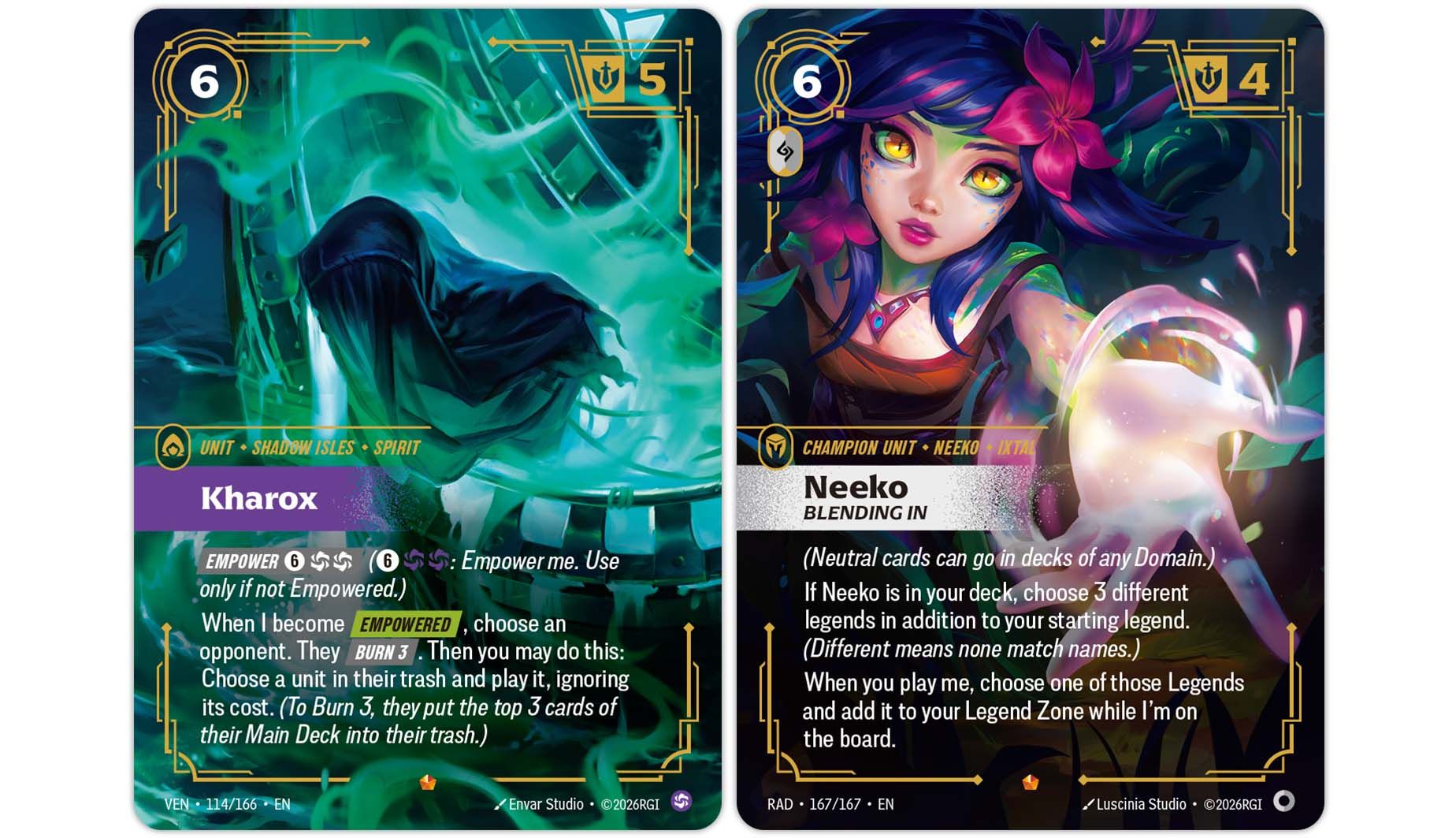
If my opponent empowers Kharox and chooses to play my Neeko, Blending In from my trash with the triggered ability, do they get one of the Legends I chose during deckbuilding?
No.
When the play effect of the Neeko played through Kharox resolves, if their deck has one or more copies of Neeko, Blending In, they can add one of the Legends they chose during deckbuilding to their Legend Zone as if they had played a copy of Neeko that they own. The Legends they add to the Legend Zone don’t have any relation to the Legends their opponent chose. If their deck has no copies of Neeko, in the Main Deck or the sideboard, that instruction will be ignored.
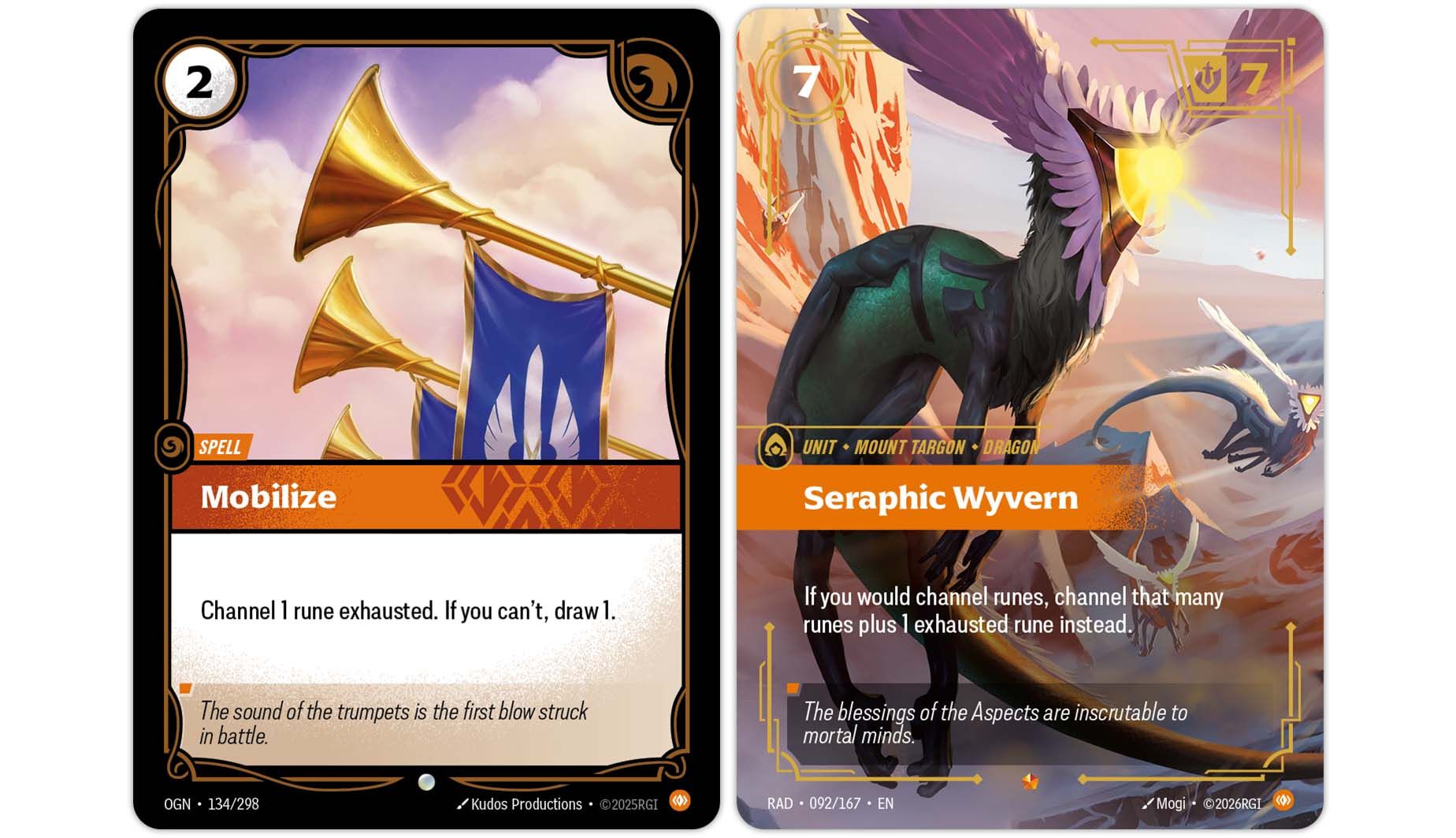
If I play Mobilize while I control Seraphic Wyvern and I only have one rune left in my Rune Deck, do I still draw a card?
No.
Referencing the action in this way refers only to the game action and the game object it was performed on. The channel event that Seraphic Wyvern instructs introduces a new game object that the action is performed on, but the referenced action is still only the original one in the instructions of the spell.
The same logic applies to Catalyst of Aeons played while its controller has a Seraphic Wyvern on the board and only two runes left in their Rune Deck. They were able to channel 2 runes, even if the additional game object instructed to be channeled by Seraphic Wyvern wasn’t possible. Therefore they will not draw 1.
Relevant rules: 359.3.e.14.c.
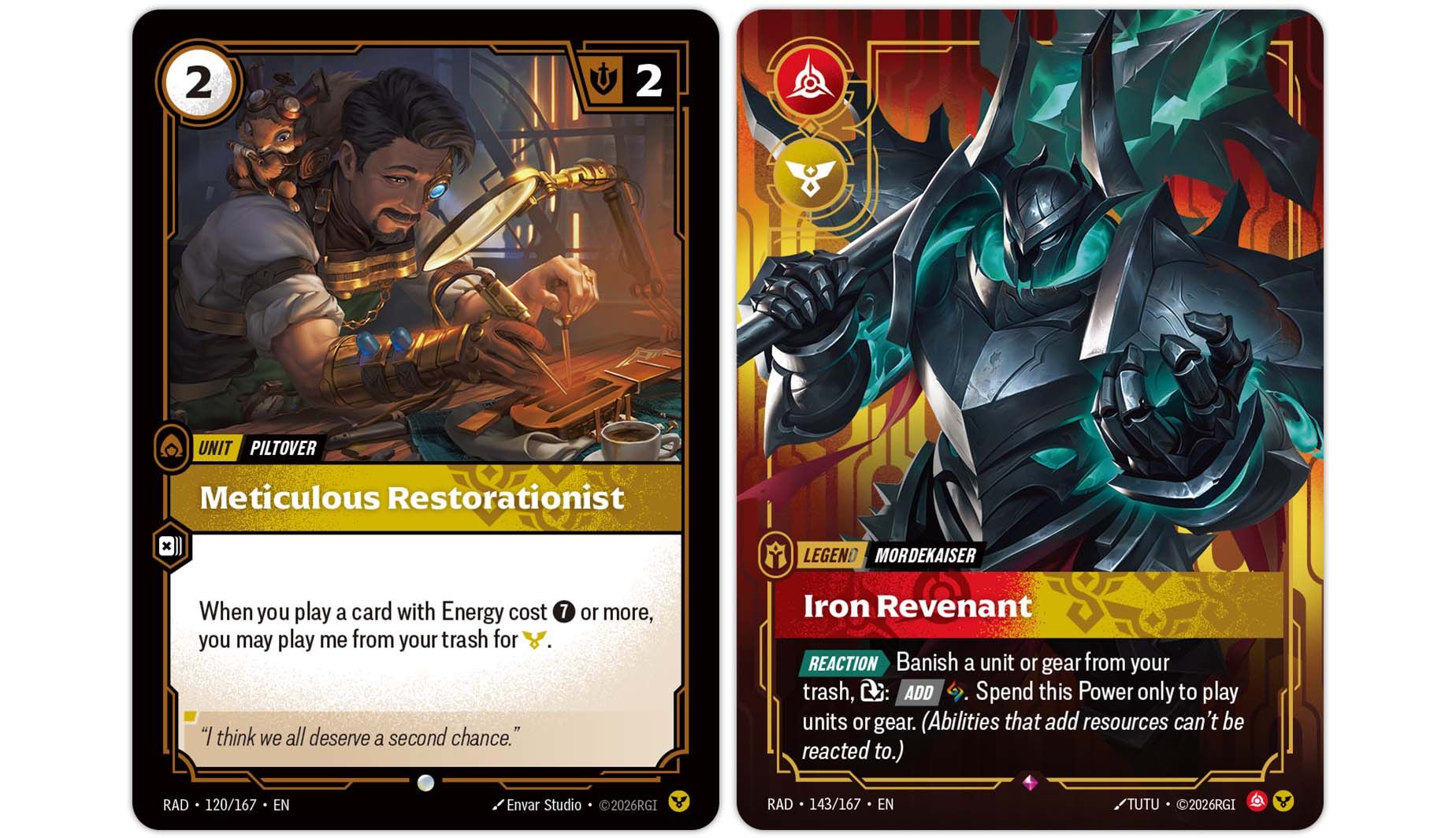
If I play Meticulous Restorationist from my trash for [Y] via its triggered ability, can I banish a unit or gear from my trash with Mordekaiser, Iron Revenant to pay the cost?
Yes.
“Play me for [Cost]” is an alternate cost which replaces the base cost ([2]) with the alternate cost ([Y]). Mordekaiser, Iron Revenant’s Power can only be spent to play units.
Relevant rules: 356.1.a.
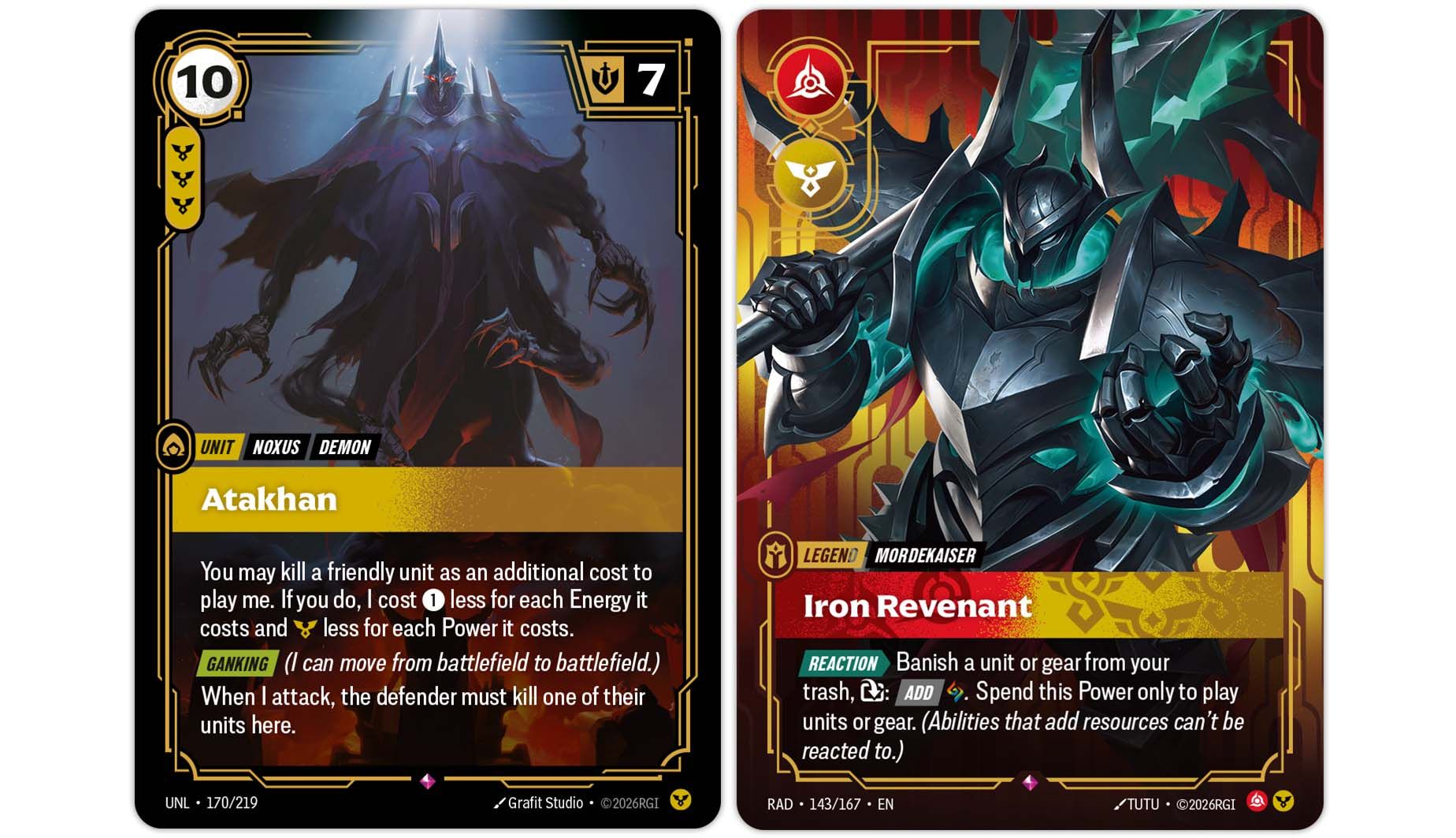
If I play Atakhan and kill a non-token unit for its additional cost, can I banish that unit with Mordekaiser, Iron Revenant to help pay for Atakhan’s Power cost?
No.
When paying costs in Riftbound, you pay Energy and Power costs before you perform other “non-standard” costs, like Atakhan’s optional additional cost to kill a unit. When paying the Power cost of Atakhan, the unit in question is not actually dead yet, and thus cannot be banished from your trash.
Relevant rules: 357.1., 357.2.
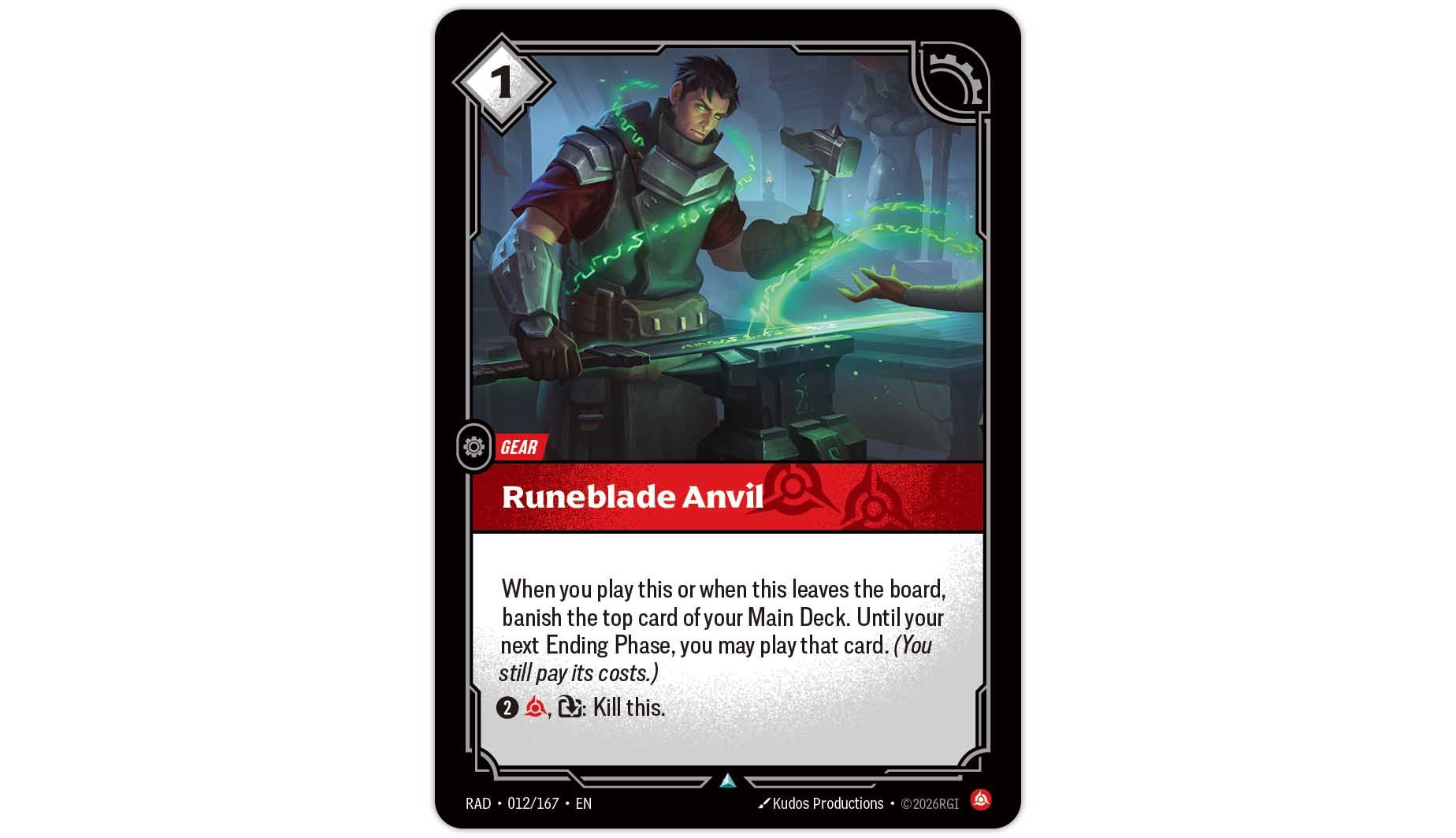
If I kill Runeblade Anvil during an opponent’s turn, when is the last moment I can play the banished card?
You can play it until the Ending Phase in your next turn begins.
If I kill Runeblade Anvil during my turn, can I play the card during the Ending Phase of that turn?
No.
The duration for Runeblade Anvil’s permission is “until your next Ending Phase.” It is valid until the specified point in the specified turn begins, and then the permission is lost.
If I kill Runeblade Anvil during my Ending Phase, when is the last moment I can play the banished card?
You can play it until the Ending Phase in your next turn begins.
Your next Ending Phase after your current Ending Phase is the one in your next turn. Until that Ending Phase begins, you will be able to play the card in question.
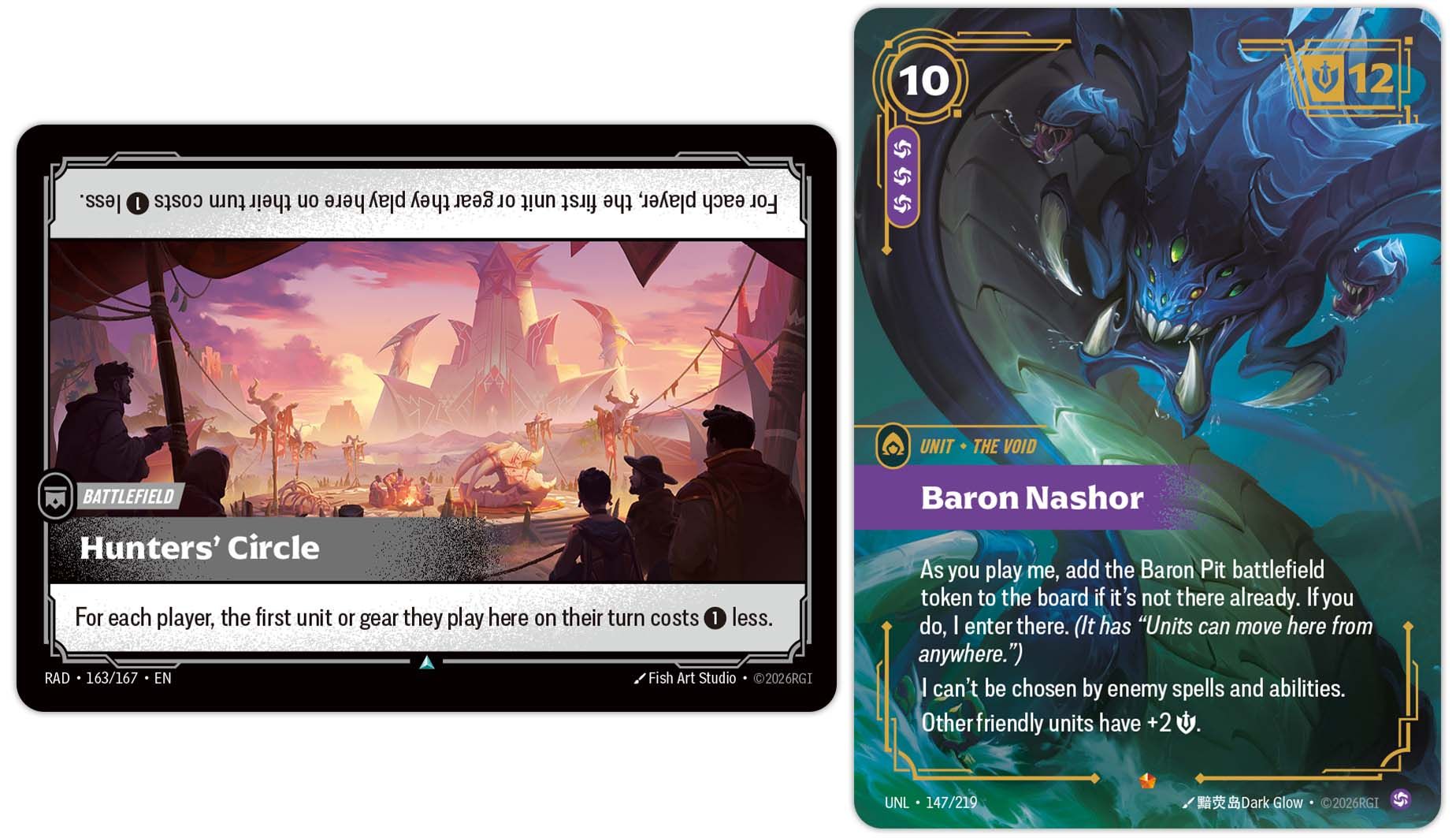
If I control Hunters’ Circle and I play Baron Nashor without a Baron Pit on the board, can I play him for [9][C][C][C]?
Yes.
Hunters’ Circle applies a cost reduction to the first unit or gear each player plays there during their turn. Baron Nashor entering at the Baron Pit is a replacement effect that applies while Baron resolves and enters the board. In comparison, Hunters’ Circle’s cost reduction is in effect during finalization, when choosing play locations in step 2 and determining the total cost in step 3. By the time Baron Nashor’s replacement effect applies, his cost has been determined and paid.
Relevant rules: 355.2.
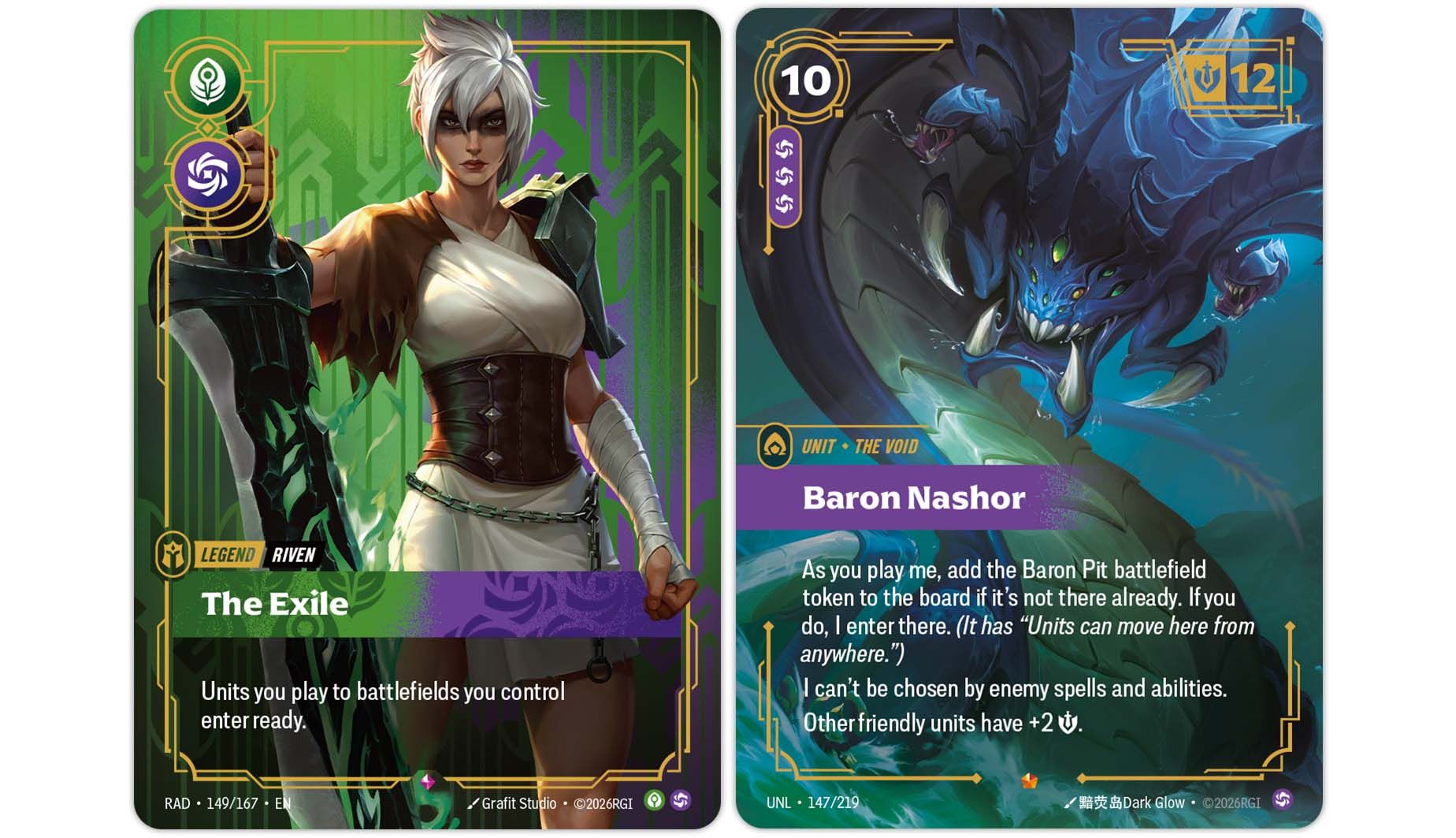
If I control a battlefield and I have Riven, the Exile as my legend, can I play Baron Nashor without a Baron Pit on the board and have him enter ready?
Yes.
Riven, the Exile applies a replacement effect to units her controller plays to a battlefield they control. This refers to step 2 of finalization, when players pick the play location for a unit they are playing. Riven then generates a replacement effect for those units, which causes them to enter ready. When Baron Nashor enters in this scenario, there are two replacement effects that apply to the event of him entering: him entering ready, and him entering to the Baron Pit. Regardless of the order of these replacement effects, Baron Nashor will enter ready at the Baron Pit.
Relevant rules: 355.2.
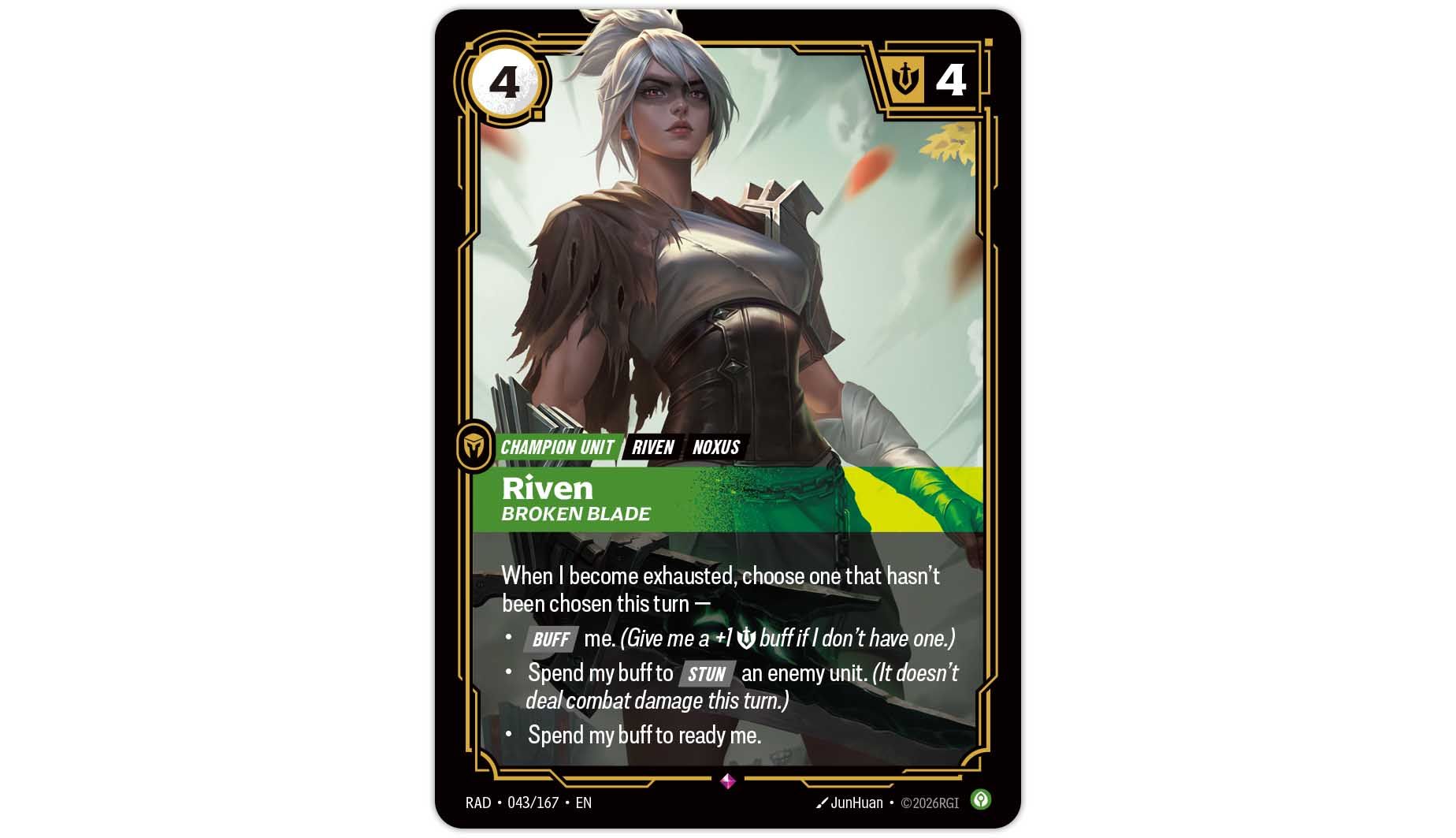
For Riven, Broken Blade’s exhaust trigger, do I spend the buff when finalizing the triggered ability or when it resolves?
When it resolves.
A cost within instructions that doesn’t appear as the first part of a triggered ability’s effect is part of the instructions that occur on resolution and not the base cost of the triggered ability. The first part of Riven, Broken Blade’s triggered ability is “Choose one that hasn’t been chosen this turn…”
Relevant rules: 383.3.b.
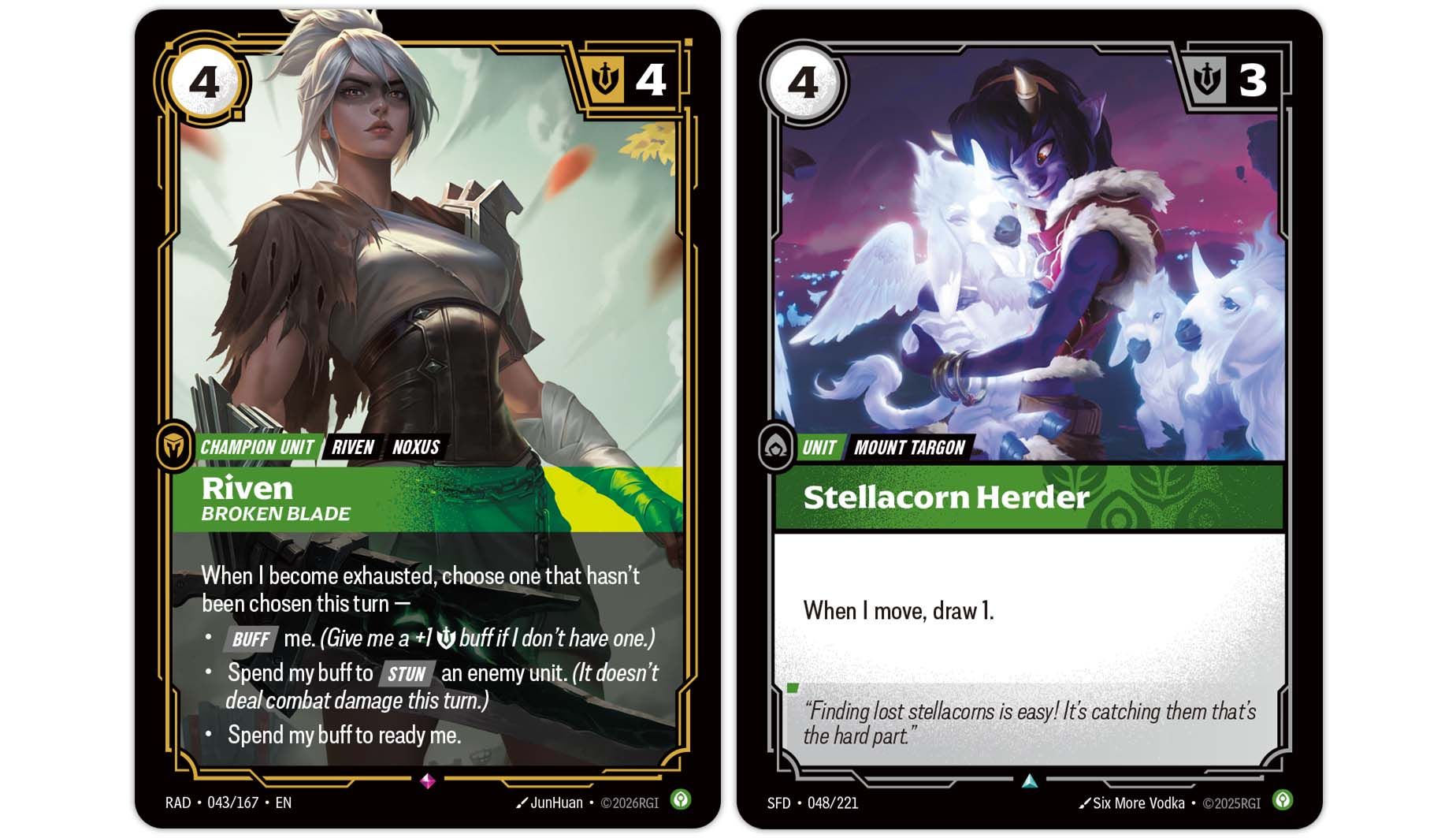
If I Standard Move a Riven, Broken Blade and a Stellacorn Herder simultaneously, which goes on the chain first: Riven’s exhaust trigger or Stellacorn Herder’s move trigger?
The exhaust trigger.
The order of the triggers on the chain after the move event completes is: exhaust triggers first, followed by move triggers. The cost to perform the move occurs before the move action is actually performed.
Relevant rules: 203.
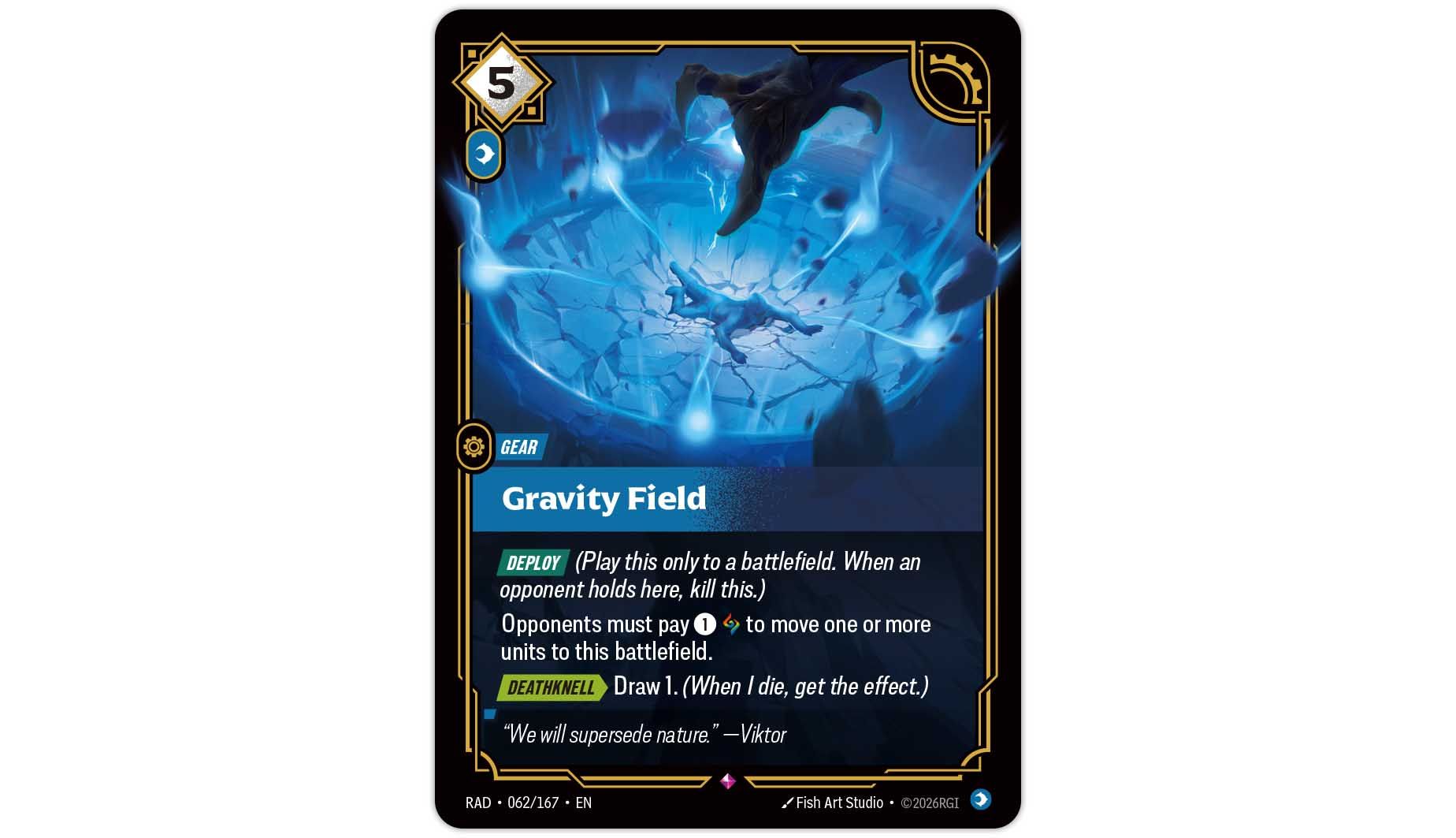
If I attempt to Standard Move to a battlefield with Gravity Field and decline the cost, can I still exhaust my unit?
No.
The Standard Move is an inherent ability. We’ll clarify some established consensus on how the Standard Move operates: you cannot attempt to perform the Standard Move if the resulting move is not possible, nor if you cannot pay its associated costs.
Additionally, if the Standard Move incurs a Cost that cannot be paid, or if the move action cannot otherwise be performed, the Standard Move and all actions taken as part of performing it will be undone, any effects those actions caused to occur are similarly undone, and the Standard Move will be cancelled.
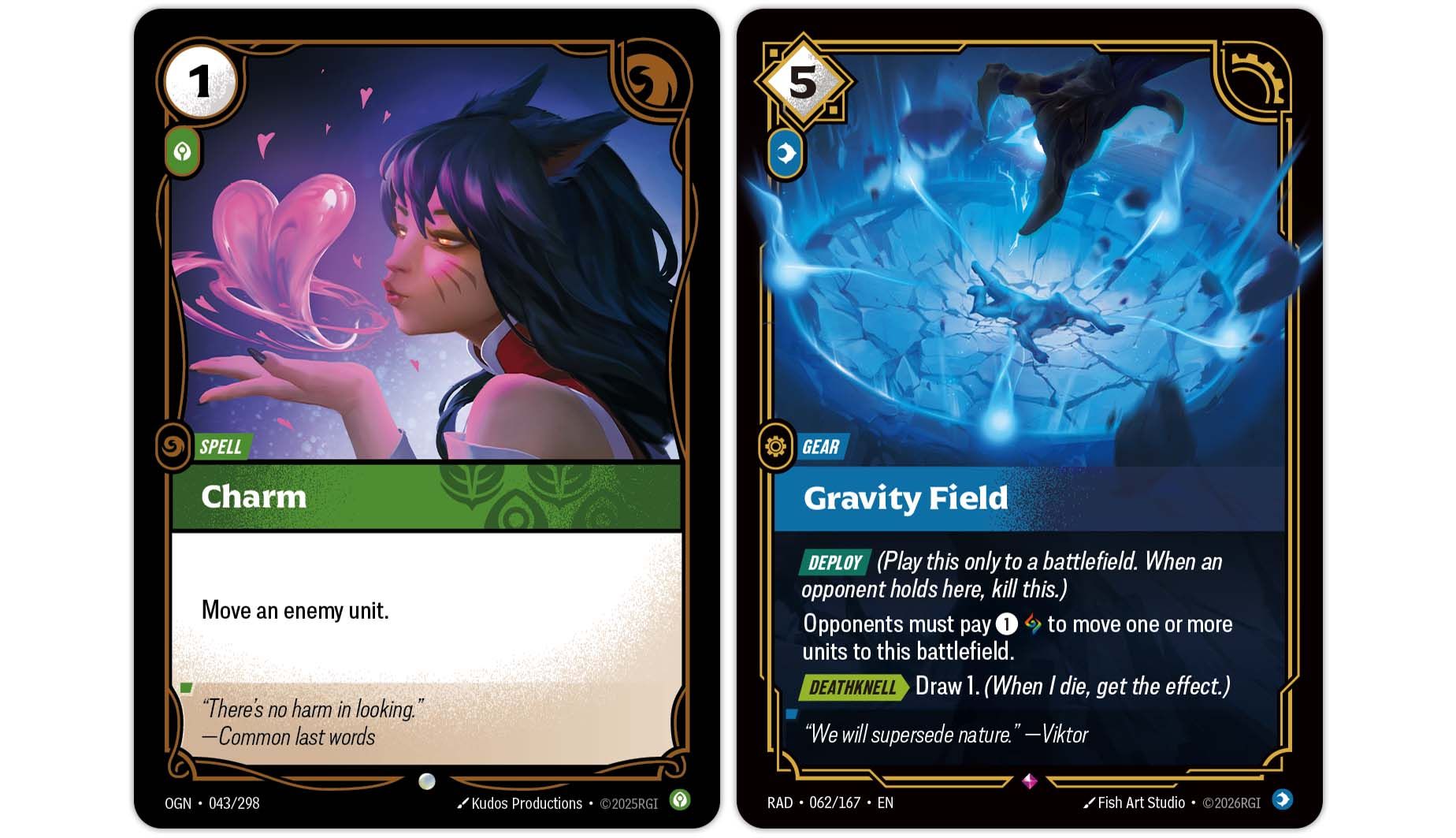
If I play Charm moving an enemy unit to a battlefield where I control Gravity Field, does its controller have to pay the cost?
No.
The opponent must pay [1][A] to move a unit to the battlefield with Gravity Field, but Charm instructs you to move the enemy unit and not your opponent.
If your opponent controlled the Gravity Field at that battlefield, you would be the one who would have to pay [1][A] to move the enemy unit to that battlefield when Charm resolves.
Relevant rules: 412.2. and its subrules
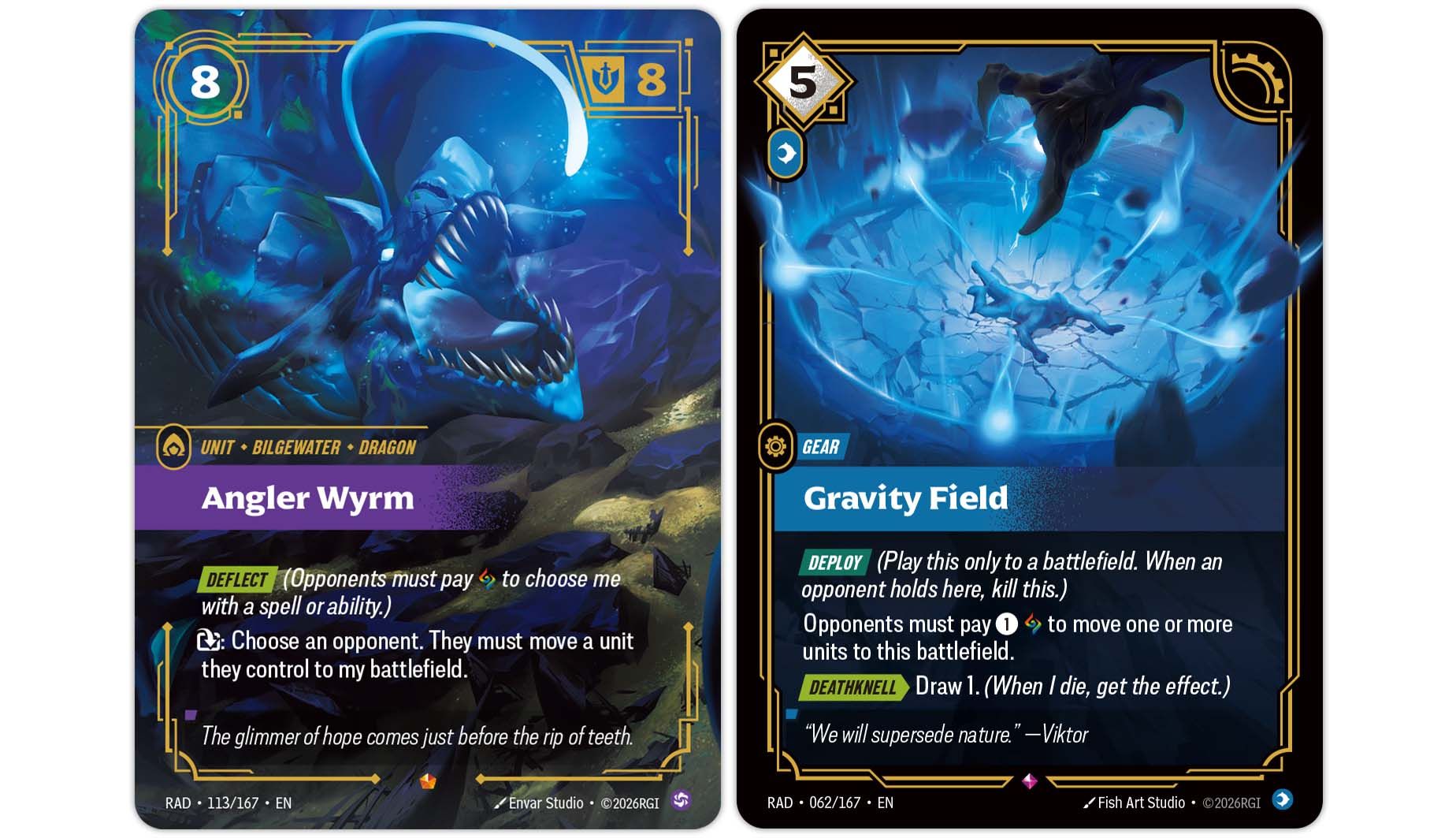
What about if I play Angler Wyrm’s activated ability while it’s located at the same battlefield with Gravity Field? Will they have to pay the cost to move the unit to the battlefield?
Yes.
Unlike Charm, Angler Wyrm instructs your opponent to move their unit, so they must pay the cost in order to move it to that battlefield. If they choose not to or can’t, the unit does not move.
Relevant rules: 412.2. and its subrules, 204.4., 204.4.b., 204.4.c.
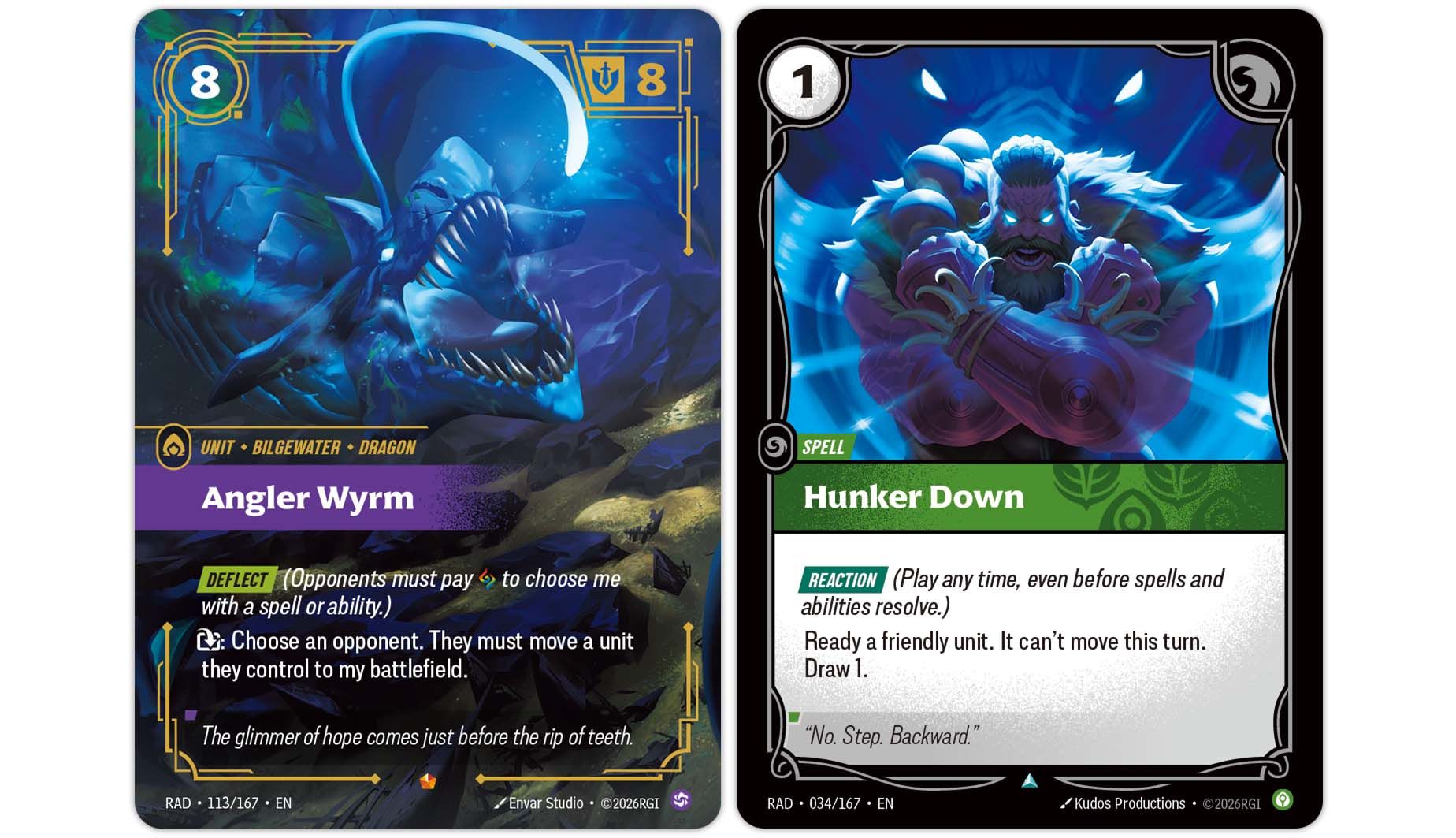
Speaking of Angler Wyrm, if my opponent plays Angler Wyrm’s activated ability choosing me and I play Hunker Down on one of my units, can I pick that unit when Angler Wyrm instructs me to move a unit even if I control other units?
No, you cannot.
The chosen opponent must perform the move game action if they have a unit that can move. If they control some number of units that cannot move, they cannot choose to “move” those units to satisfy the move instructions, as no move is actually possible. If they control no units that can move, the instruction is negated. If they have some number of units that can move, they must move one of those units.
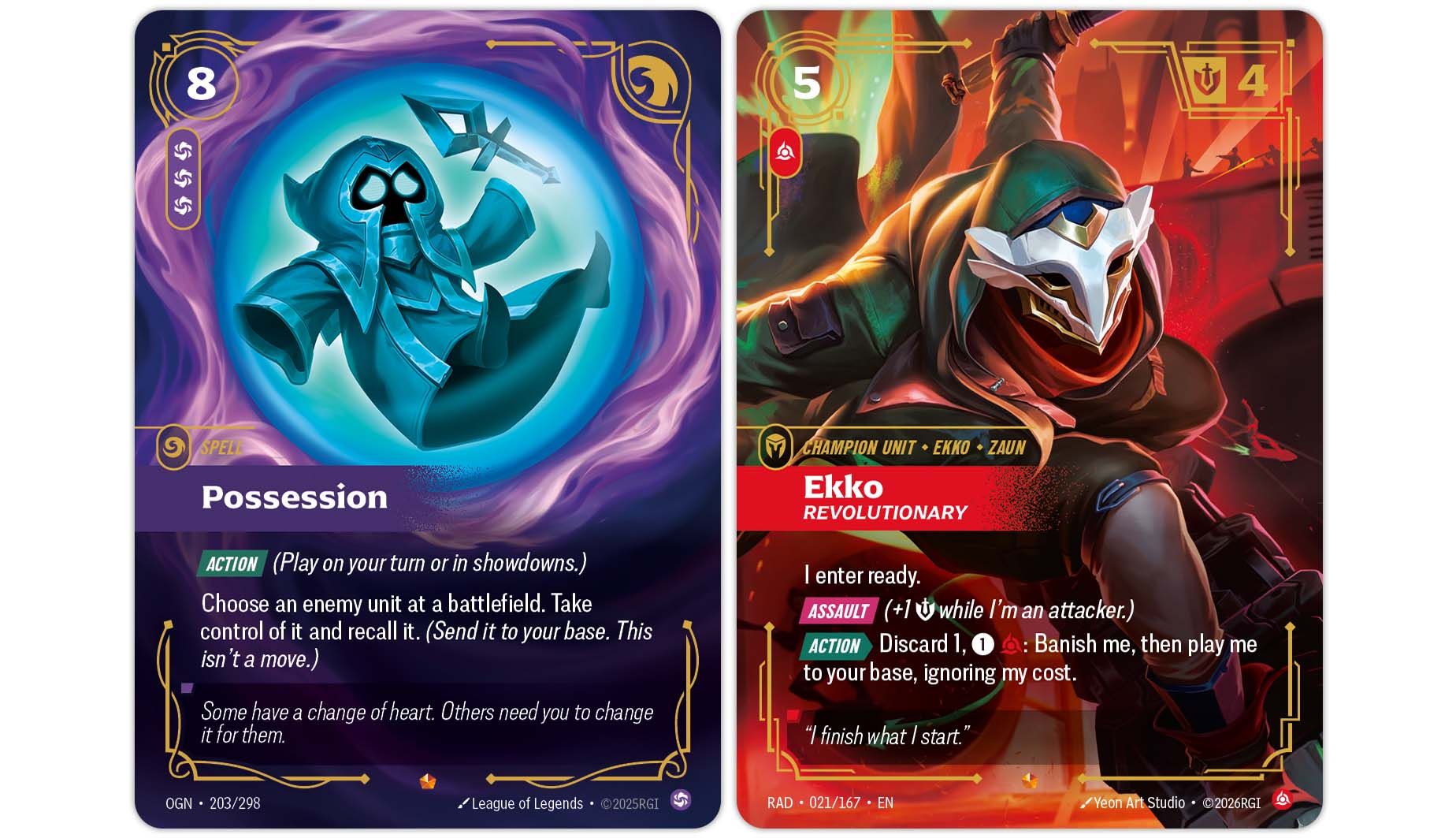
If I play Possession and take control of my opponent’s Ekko, Revolutionary, can I play his activated ability to banish and then play him? Do I control him when he comes back in?
Yup and yup.
Relevant rules: 378., 191.2.